Operational excellence, in the lab and on the line.
The execution gap in life sciences
MES, LIMS, and QMS systems define and record work, but they stop short of the line — leaving an execution gap between approved procedures and how operators actually perform GxP‑critical tasks in labs and plants.
Heavy regulatory burden and audit risk
FDA, EMA, MHRA, and other regulators demand complete, accurate, and contemporaneous records — and paper or fragmented digital tools make it hard to prove exactly what happened, when, and by whom.
Batch records and error‑prone docs
Manual batch records, logbooks, and checklists are slow to complete, hard to review, and prone to transcription errors that can jeopardize release and trigger costly investigations.
Training verification and operator competency
Keeping training and competency aligned with the exact procedures operators execute is difficult, especially across shifts, sites, and contract staff — increasing the risk of non‑compliant work.
Limited visibility into line and lab execution
Leaders see deviations, CAPAs, and batch outcomes, but lack step‑by‑step execution data that shows where procedures drift, where errors originate, and how work really happens on the floor.
A scientific approach to operational excellence
Explore how Atheer improves life sciences operations — from batch execution and lab workflows to equipment cleaning and audit preparation — with solutions that are proven on the shop floor and ready to scale.
Batch execution and electronic work instructions
Standardize and digitize batch‑related tasks so operators follow the right version of each procedure, capture the data and evidence you need, and generate an audit‑ready trail for every lot.
Typical use cases: In‑process checks and line operations linked to batch records, Line clearance and changeover workflows, Micro‑sampling and in‑process control documentation
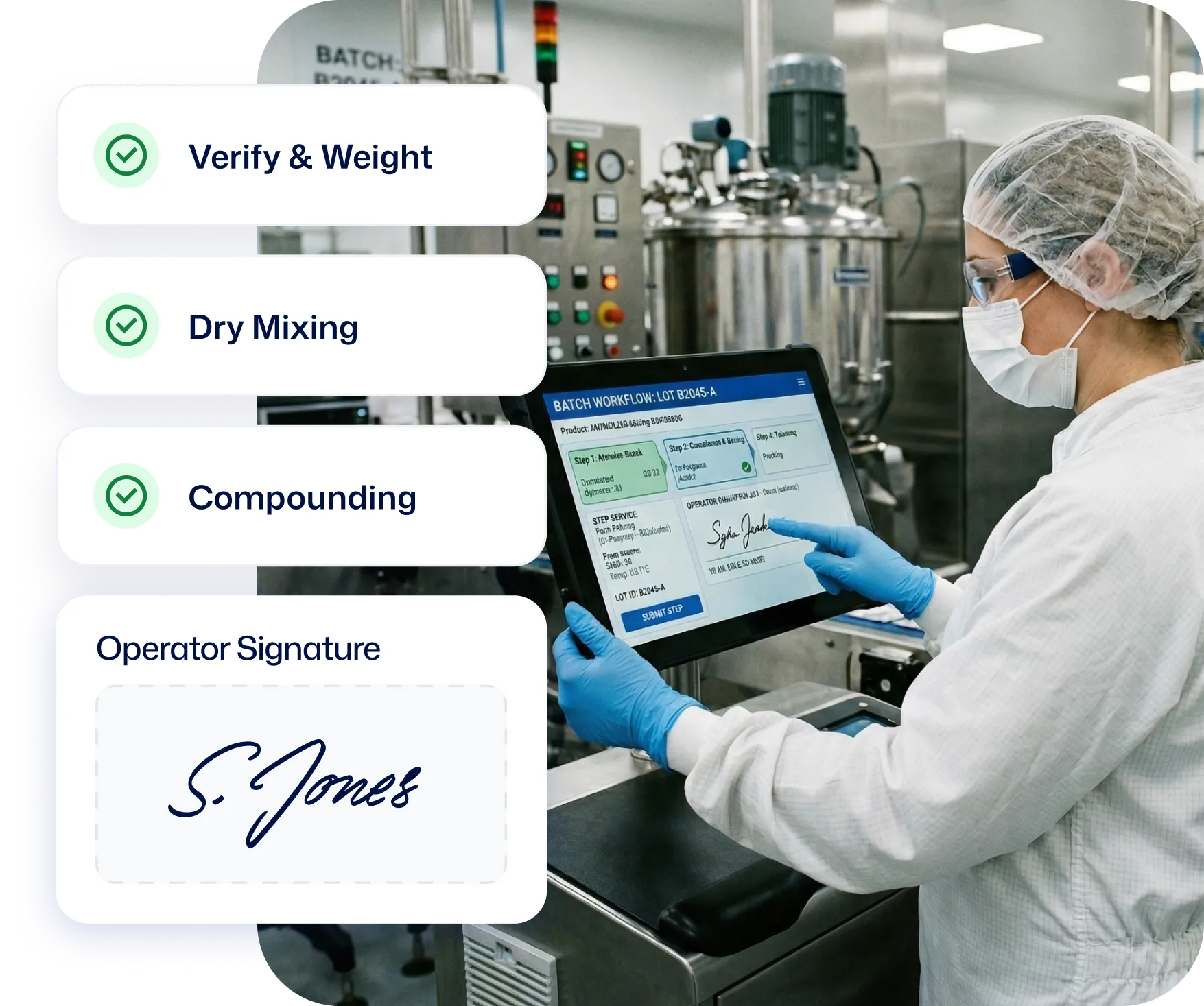
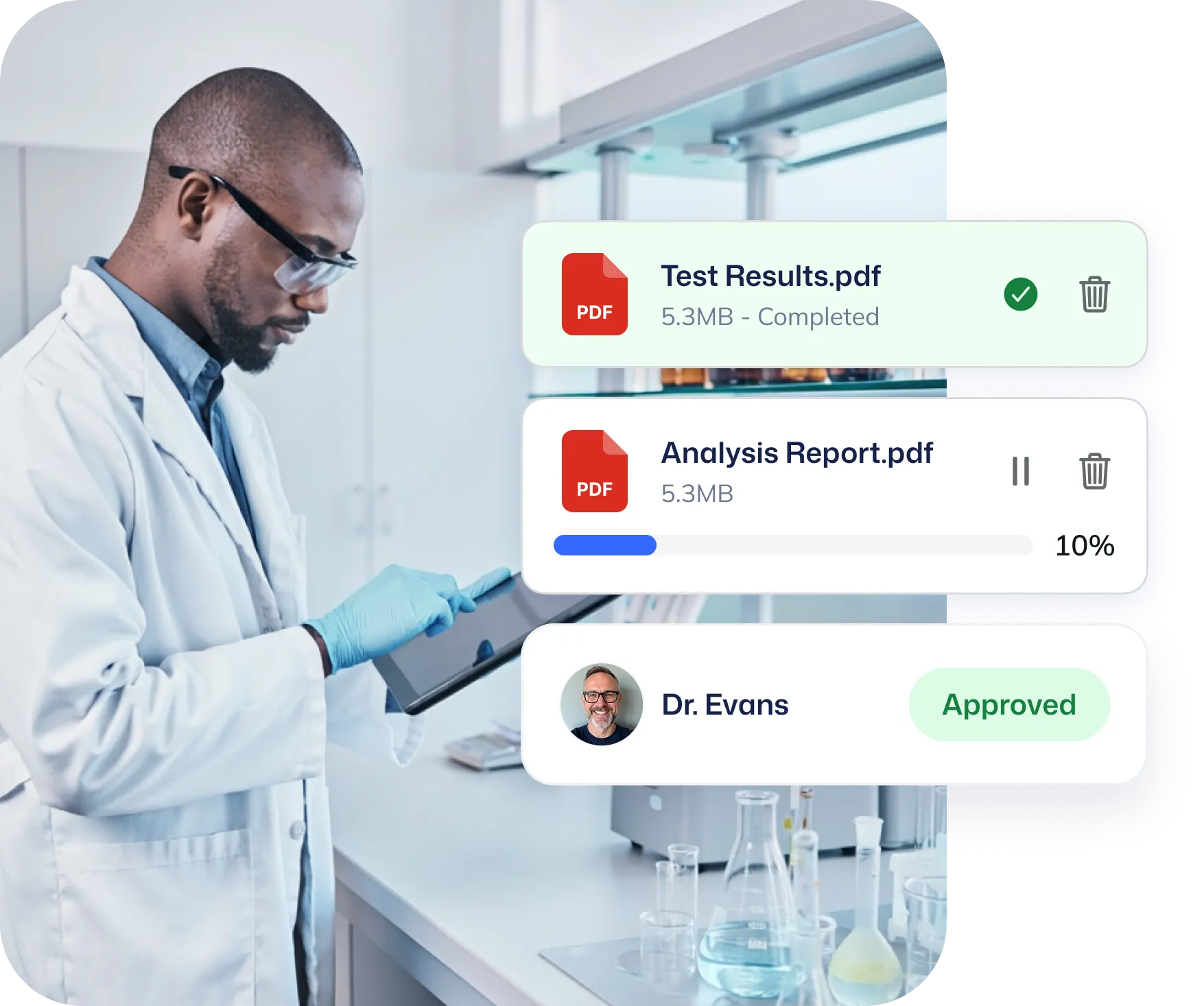
Lab workflows and documentation
Digitize lab procedures and test workflows so analysts follow standardized steps, capture results correctly, and maintain traceable, reviewable records for every sample and method.
Typical use cases: QC test execution and documentation, Stability and release testing workflows, Instrument logbooks and calibration verification
Equipment cleaning,
calibration, and maintenance
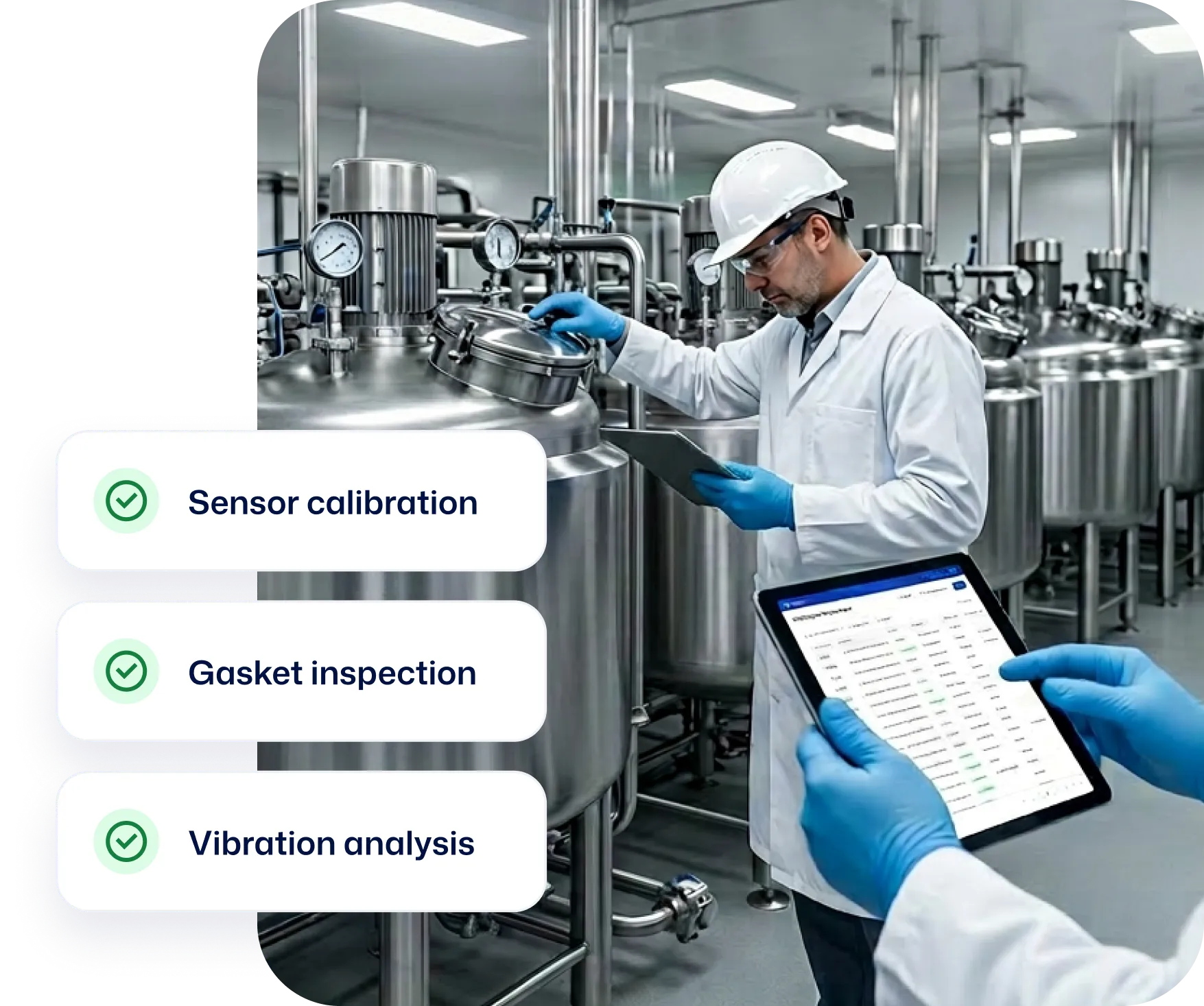
Ensure cleaning, calibration, and maintenance are performed exactly as specified and fully documented — reducing contamination risk and avoiding preventable deviations tied to equipment readiness.
Typical use cases: Cleaning and sanitization procedures (CIP/SIP, manual cleaning), Calibration routines and verification steps, Preventive maintenance and safety checks on critical equipment
Training, qualification, and remote support
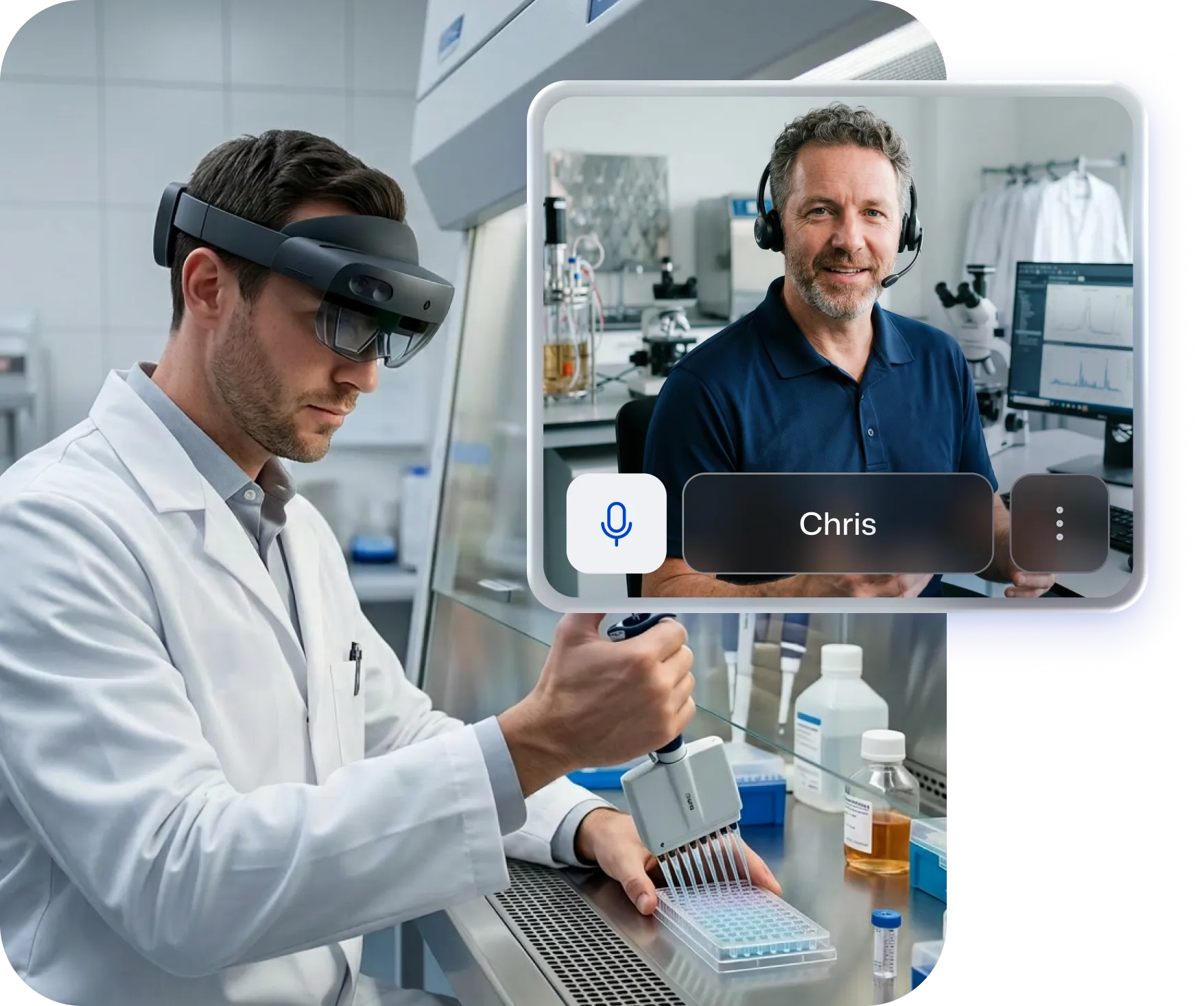
Link training records directly to the workflows operators execute, and use remote expert support to resolve questions or issues without waiting for on‑site help — all while capturing a defensible record of who did what, when, and under which authorization.
Typical use cases: Onboarding operators to new products, lines, or methods, Qualification for high‑risk or complex GxP tasks, Remote support for investigations, troubleshooting, or line issues
“A recent industry review found that nearly 8 in 10 failed audits tie directly to compliance records that look complete, but can’t be validated.”


.webp)