Oil, Gas & Energy Digital Transformation: Closing the Frontline Execution Gap with Human‑Centric AI
In oil, gas & energy, a single missed step can shut down a platform, trigger an incident investigation, or stall a multi‑million‑dollar turnaround. Yet many frontline crews still rely on paper JSAs, disconnected checklists, and tribal knowledge, even as executives invest heavily in AI, IoT, and advanced analytics. Human work execution platforms close this gap by guiding every procedure, supporting every worker, and documenting every action from rig to refinery.
The OGE Execution Gap: Where Digital Initiatives Still Fall Short
Despite significant digital spend, most operators acknowledge that frontline execution remains the weakest link in their operating model.
- Pilot purgatory is real
McKinsey notes that around 70% of oil and gas digital initiatives never scale beyond pilots, in part because new tools do not embed deeply enough into daily work or deliver clear bottom‑line impact.
- Unplanned downtime remains a board‑level risk
Studies across industrial sectors show unplanned downtime can cost up to 1.7M USD per hour, with single incidents reaching tens of millions once secondary costs are included. In upstream, one day of offshore downtime can mean 0.5–2M USD in lost production; in refining, unplanned shutdowns can exceed 1–5M USD per day.
- Safety and compliance pressure is intensifying
The oil and gas worker fatality rate remains several times higher than the all‑industry average, and regulatory penalties for environmental and safety violations can run into tens of millions. Procedure drift, incomplete documentation, and language barriers are persistent root causes.
- Knowledge is walking out the door
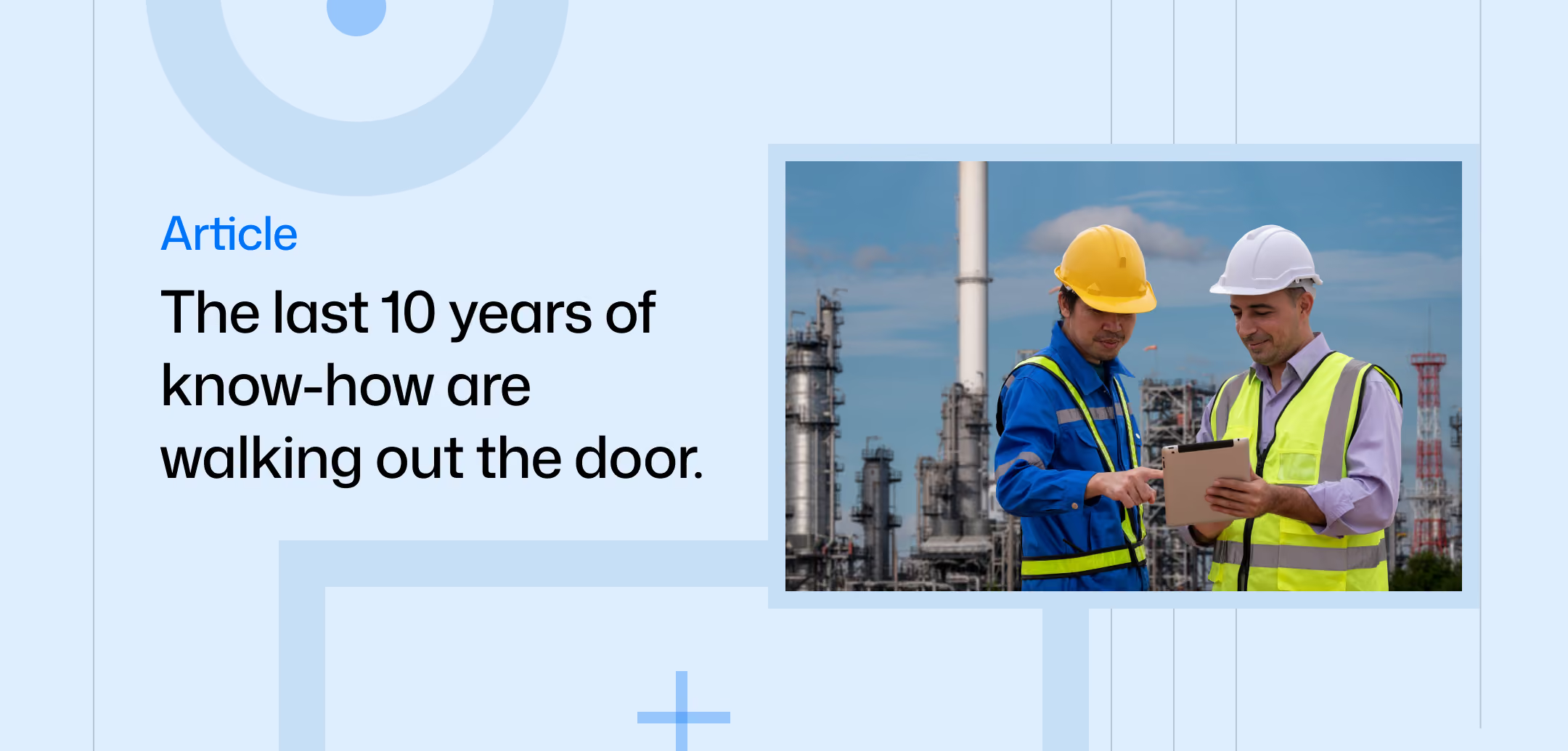
Many operators expect up to 60% of their experienced workforce to retire within ten years, while time‑to‑proficiency for new technicians can be 18–36 months without digital support. This is occurring just as assets and operating environments become more complex.
The common pattern: systems of record (ERP, EAM, EHS, IoT) know what should happen, but they are blind to how work is actually executed in the field.
From Systems of Record to a Human Work Execution Fabric
A human work execution platform sits between core systems (SAP, Maximo, EHS, IoT) and the people doing the work, acting as an execution fabric rather than another point solution.
What it is
- Human‑centric layer
The primary unit of value is the executed task—who did what, when, where, how, with which guidance, evidence, and exceptions. This becomes the work execution system of record, complementing asset and financial systems.
- End‑to‑end coverage across the OGE value chain
The same platform can support upstream rig commissioning, midstream pipeline inspections, and downstream turnarounds, using common building blocks (workflows, agents, integrations) tailored by segment.
- Device‑agnostic and field‑ready
Execution is delivered via web, rugged tablets, smartphones, and ATEX‑certified wearables, with offline capability for remote or offshore environments. This aligns with broader tech‑trend guidance that emphasizes real‑time, edge‑ready architectures for industrial AI.
What it is not
- Not a replacement for ERP/EAM/CMMS; it extends them to the “last mile” where execution actually happens.
- Not just a mobile form app; it embeds intelligence, collaboration, and proof of execution into every step.
High‑Value Use Cases Across the OGE Value Chain
Upstream: Safer, Faster Rig and Field Operations
- Rig commissioning and start‑up/shutdown
Guided digital procedures on tablets or wearables ensure every step, sign‑off, and test is completed in sequence, with mandatory photo/video evidence for critical checks.
- Daily inspection rounds and asset integrity
Operators receive prioritized, sensor‑informed routes; anomalies trigger instant remote expert sessions or AI‑guided troubleshooting, reducing mean‑time‑to‑repair.
- JSA, PTW, and LOTO in hazardous areas
High‑risk work permits are digitized, with conditional logic that prevents work from starting until all prerequisites are verified—gas testing, rescue plans, isolations.
Midstream: Pipeline Integrity and Emergency Response
- Pipeline and station inspections
Field teams follow standard workflows linked to GIS, asset history, and real‑time SCADA data, capturing geo‑tagged evidence for each anomaly.
- IoT‑triggered maintenance
Pressure, flow, or vibration anomalies automatically launch guided tasks, ensuring the right crew, tools, and instructions reach the right location quickly.
- Emergency procedures
Pre‑defined, multi‑agency playbooks are executed through the platform, with real‑time visibility for control rooms and HSE.
Downstream: Turnarounds, Refining, and Petrochemicals
- Turnaround orchestration
Thousands of work packages and hundreds of contractors are managed via digital workflows, role‑based access, and live progress dashboards. Lessons learned and deviations are captured systematically for the next event.
- Quality and compliance checks
Refinery operations and petrochemical units use guided checks and media capture to support product quality, emission controls, and process safety management.
- Contractor onboarding and competency
Training, certifications, and site inductions are digitized and linked directly to task eligibility, reducing risk and admin overhead.
Agentic AI: Making Every Crew Smarter and Safer
The next wave of value in OGE will come from combining frontline execution data with agentic AI—the shift from static workflows to AI‑assisted, adaptive execution.
- Knowledge agents
Workers can ask questions about procedures, assets, or past incidents and get in‑context answers sourced from SOPs, manuals, and prior work records. This reduces dependence on the few experts who currently field most calls.
- Monitoring agents
Agents watch IoT and execution data to flag patterns—e.g., repeated minor deviations on a unit—that may signal emerging risks or training needs. Industry commentary suggests these “early agentic steps” in energy are building trust and governance for more ambitious automation.
- Authoring agents
AI converts existing manuals, PDFs, and tribal knowledge into executable workflows, drastically reducing the time and cost of keeping procedures up to date.
Crucially, humans stay firmly in the loop: agents recommend and orchestrate, while supervisors and workers make the final calls in high‑consequence scenarios.
Measurable Impact: Downtime, Safety, Compliance, and Cost
When executed well, human work execution platforms deliver improvements that are visible in both operations KPIs and financials.
- Unplanned downtime and MTTR:
By combining remote expert support with guided workflows and IoT triggers, operators can reduce unplanned downtime by 15–20% and cut travel costs by up to 90%. With per‑hour downtime costs often exceeding seven figures, even modest MTTR reductions translate into material P&L impact.
- Safety and regulatory outcomes:
Step‑enforced workflows, mandatory evidence capture, and real‑time escalation mechanisms reduce procedure drift and strengthen audit defensibility. Operators report lower incident rates and a significant reduction in time required to respond to regulators and internal investigations.
- Workforce capability and knowledge retention:
AI‑supported guidance, remote mentoring, and embedded micro‑learning shorten time‑to‑competency for new hires and preserve expertise from retiring staff. McKinsey’s research underscores that such investments in frontline AI skills are critical to realizing the productivity promise of AI at scale.
- Administrative efficiency and IT value
Federating data across ERP/EAM/EHS/IoT and eliminating duplicate entry can free up roughly 40% of frontline administrative time. This also improves data quality and accelerates other analytics and AI programs across the enterprise.
A Roadmap for OGE Leaders: From Pilot to Platform
To avoid yet another round of pilots that never scale, CEOs, COOs, and CDOs should treat human work execution as an operating‑model change, not a point project.
- Anchor on value and priority pain points
Quantify the cost of unplanned downtime, safety incidents, and turnaround overruns at your sites.
Choose 1–2 high‑impact workflows (e.g., JSA/PTW in upstream, pipeline integrity in midstream, turnarounds downstream) as initial focus areas.
- Design with frontline crews, not just for them
Co‑create workflows and AI use cases with supervisors and technicians to ensure practicality and adoption.
Incorporate multilingual content, offline modes, and realistic device choices, especially for remote and hazardous environments.
- Integrate with core systems from day one
Use a federated data hub approach so work orders, incidents, and sensor data flow seamlessly between the execution fabric and SAP, Maximo, EHS, and IoT platforms.
Define clear data ownership: ERP/EAM as asset system of record; execution platform as work system of record.
- Scale using a maturity model
Move from digitized forms to guided workflows, then to integrated IoT and agentic AI support as teams build confidence.
Track KPIs like downtime, TRIR, first‑time‑right, time‑to‑proficiency, and audit findings to demonstrate compounding benefits.
- Align culture, incentives, and change management
Research shows that large‑scale OGE transformations succeed when leadership role‑models new behaviors, adjusts incentives, and invests heavily in capability building.
Position the platform not as surveillance, but as a way to protect workers, simplify their jobs, and recognize their expertise
Explore the latest News
.webp)